Wednesday, 6 May 2020

Diagnosing Traffic Drops During a Crisis: Was It You, Google, or the Whole World?

Posted by Dr-Pete

We want to fix things and believe we're in control. When your house is filling with water, you grab a bucket. If there's a hole in your roof, the bucket might help. If your sink is overflowing, the bucket is distracting you from the real problem. If the river is overflowing, that distraction could be deadly.

When traffic is falling, it's easy to panic and focus on what you can control. Traffic isn't just a nice-to-have — it puts food on the table and the roof over your head that keeps the water out. In the rush to solve the problem, though, we often don't take the time to validate the problem we're solving. Fixing the wrong problem is at best a waste of time and money, but at worst could deepen the crisis.

In any crisis, and especially a global one, the first question you need to ask is: is it just me, or is it the whole world? The answer won't magically solve your problems, but it can keep you from making costly mistakes and start you on the path to a solution. Let's start with a fundamental question:

(1) Did your traffic really drop?

My "fundamental" question might sound like a stupid question, especially given the wide impact of the COVID-19 pandemic, but it's important to remember that traffic fluctuates all the time — there are weekends and seasonality and plain, old regression to the mean. What goes up must come down, and as much as we'd like it to be true, business is not perpetually up and to the right.

Using Google Analytics, let's consider some ways we can validate a traffic drop. Here's four weeks of GA data (March 1-28) for a site which was seriously impacted by COVID-19:

Given the known timeline of COVID-19 (the WHO declared it a pandemic on March 11), this is about as clean a picture of a traffic drop in the presence of a known cause as you're going to get. Most situations are far messier. Even here, we've got the impact of weekends and day-to-day fluctuations. One quick way to get a cleaner view is to summarize the data by week (make sure your date-range covers full weeks, or this data will be skewed).

The trend is much clearer now. In a two week period, this site lost more than half of its traffic. I'm restricting the timeline for clarity, but as we gather more data, we can validate the trend pretty easily. The graph above covers all traffic sources. From an SEO perspective, let's add in a traffic segment for Google traffic:

This graph is just eight data points, but it tells us a lot. First, we can clearly see the trend. Second, we can see that the trend is almost identical for both Google traffic and overall traffic. Third, we can see that this site is very dependent on Google for traffic. Don't underestimate what you can learn from small data, if it's the right data.

This isn't meant to be a GA primer, but let's look at one last question: Is this traffic drop seasonal? Usually, your own industry experience and intuition would come into play, but one quick way to spot this is to compare year-over-year traffic. One note: match your full weeks so that you're covering the same amount of weekdays vs weekends. In this case, I've shifted the 2019 range to the four full weeks of March 3-30 ...

This isn't the easiest graph to read, and I probably wouldn't put it in a report to a client, but you can see from the green and purple lines that both overall traffic and Google traffic for this site were relatively flat last year during March. This really does seem to be an unusual situation. Even if we knew nothing about the context and COVID-19, we could tell from just a few minutes of analysis that something serious is going on here.

(1b) Did your rankings drop?

As a search marketer, and given that we've clearly measured a Google traffic drop, the next question is whether this drop was due to a loss of rankings (we'll get to other explanations in a moment). In Moz Pro, one quick way to assess overall weekly search visibility is to use either the main view under "Rankings" or go to the "Competition" tab. I like the competitive view, because you can quickly see if any changes impacted your broader industry ...

I've simplified this view a little bit (and removed the site's and competitors' names for privacy reasons), but the basic story is clear — neither the site in question nor its competitors seemed to have any drop in visibility during March.

For a richer view, go back to the "Rankings" tab and select "Rankings" (instead of "Search Visibility") from the drop-down. You'll see a graph that looks something like this ...

This visualization takes some getting used to, but it contains a wealth of information. The bars represent total ranking keywords/phrases, and the color blocks show you the ranking range (see the legend). Here we can see that overall rankings have been relatively stable, with even some small gains in the #1-3 bucket.

If your account is connected to Google Analytics, you can also overlay traffic during the same period, which is shown by the dark gray line. Dual-scale graphs can get tricky, but this visualization really makes it clear that there's a mismatch between the traffic drop for this site and their search rankings.

(2) Did Google do something?!

Usually, when we ask [demand / shout / sob] this question, we mean "Did Google do something to the algorithm to make my life miserable?" We can argue about whether Google is trying to make your life miserable at another time (preferably, when the bars re-open), but the core question is valid. Did Google change the algorithmic rules in a way that's negatively impacting your site?

For large-scale algorithm updates, you can check our own Google Algorithm History page. For smaller/daily updates, you can check our MozCast research project. While having a gut-check against major changes can be very useful, the messy truth is that Google rankings are a real-time phenomenon that's changing minute-by-minute. In 2018 alone, Google reported 3,234 "improvements" to search.

Keep in mind that all Google algorithm tracking tools are based, to some degree, on fluctuations in rankings. In our example scenario, we're not seeing ranking shifts. Let's pretend, though, that we have seen a traffic drop with a corresponding ranking drop, and we're trying to determine if it's just us or if something changed with Google.

Here's a graph of MozCast data from my analysis of the January 2020 Core Update ...

In this case, we've got a pretty clear three-day period of ranking fluctuations. If our traffic dropped during this period, it's not absolute proof that an algorithm update is to blame, but it's a solid, educated guess and a useful starting point.

Let's look at the two weeks around when COVID-19 was declared a global pandemic ...

I've kept the same scale and 30-day average reference (from a relatively quiet period early this year). Note that algorithmic activity (i.e. ranking flux) is way up compared to the period before and after the January Core Update. One day (March 18) doesn't even fit on the scale of the original graph and came in at 104°F on MozCast.

What does all of this mean? It's possible that Google is changing the algorithm rapidly to address the broader changes in the world, but I strongly suspect that the world itself is impacting this flux. Sites are changing rapidly, adding and removing products and content, news sources have dramatically shifted their coverage, and some businesses are closing completely. On top of that, we're seeing an unprecedented shift in searcher and consumer behavior.

Algorithm flux can be a useful answer to the question "Is it just me, or is it Google?" during normal times, but all that it's telling us right now is that the world has turned upside-down. While that's an accurate assessment, it's not particularly helpful. If you'd like to hear more about the impact of COVID-19 on Google rankings, check out "SEOs talk COVID-19 search disruption" from Barry Schwartz with myself, Marie Haynes, Olga Andrienko, and Mordy Oberstein.

If traffic has dropped, but rankings haven't, it's also possible that the behavior of searchers has changed. We can get some insights into this by using Google Search Console. Here's the graph of total clicks for our example site from March 1-28 (corresponding with the GA data) ...

As expected, total clicks on Google results show roughly the same trend as Google organic traffic in GA. Total clicks are a function of two variables, though: (1) search impressions, and (2) click-through rate (CTR). Let's look at those individually. Here's the graph of total impressions for the same time period ...

Now we're getting somewhere — there's an overall drop in impressions. This isn't just about the example site, but searcher behavior before they even see or click on that site. People are searching less for the phrases that drive traffic to our example site. Finally, let's look at CTR ...

CTR has also dropped, even a bit steeper than impressions. This is a bit harder to interpret. Knowing what we know, it's likely that people are clicking less because of overall lack of interest. This is consistent with the COVID-19 scenario. People are less likely to be looking for the service this site offers. On the other hand, it could be that something about the site or the competitive landscape has changed that's driving down CTR.

If you see a CTR drop without a corresponding impression drop, review recent changes to the site, especially changes that could impact what's displayed in search results (including your TITLE tags and META descriptions). In this case, though, it's reasonable to assume that we're looking at an overall drop in demand.

(3) Has the world gone mad?

Spoiler alert: yes, yes it has.

The Google Search Console data above has already suggested that we're seeing a shift in the wider world and searcher behavior, but if you want to get outside of your own data, you can explore the world a bit with Google Trends. For example, here's a Google Trends search for "movie tickets" for March 1-28 ...

Not surprisingly, searcher interest in movie tickets declined sharply after the COVID-19 outbreak. People who aren't going to movies aren't going to be searching for showtimes and ticket prices. Google Trends data can be spotty in the long-tail, and we can't necessarily attribute a trend to an event, but non-brand trends are a good supporting data point for whether your traffic drop is isolated to your site or is impacting your broader industry.

One final tip — everything discussed in this post can also be used to explore a traffic increase. Even during COVID-19, traffic has gone up for many topics and sites. For example, here's the Google Trends data for "how to cut hair" from the same March 1-28 time period ...

Whether or not cutting your own hair is a good idea, people are definitely showing more interest in the topic (I admit I've watched a couple of YouTube videos myself). We don't typically dive deep into traffic increases — it's too easy to just sit back and take the credit. I think this is a big mistake. Understanding whether a traffic increase was driven by changes you made or broader market shifts can help you understand what you've done right so that you can replicate that success.

The big picture is everything

Over the last few years, I've heard more people say things like "I don't care about traffic, I care about conversions!" or "I don't care about Google rankings, as long as I'm getting traffic!" Our gradual move toward bottom-of-funnel metrics makes sense — we're all trying to make a living. Taken to extreme, though, we lose valuable information. Focusing on conversions is certainly better than focusing on "hits" a la 1998, but no single metric tells the whole story.

Let's say that the only thing you track is leads. Leads are where the money is. Sales are up, leads are up, times are good. Great. Inevitably, disaster strikes (even if it's a minor disaster), and your leads drop. What do you do? You've cut off your ability to read anything but the last chapter of the story. You know how it ends, but you don't know how you got there. Without understanding the path from leads back to visits back to rankings back to impressions, you're not going to see the whole story, and you're not going to know where things went wrong.

Even when times are good, this approach is short-sighted. Sales-focused culture creates a tendency to celebrate the wins and not ask too many questions. If traffic is going up, why is it going up? What content or keywords are driving that traffic? What industry trends are driving that traffic? If you can answer those questions, you can replicate success. If you can't, then you're going to have to start from scratch as soon as the celebration ends (and the celebration always ends).

It may be cold comfort to know that your entire industry or the whole world is suffering with you, but I hope that this process at least prevents you from fixing the wrong things and making costly mistakes. Ideally, this process can help you uncover areas that may be trending upward or at least help you focus your time and money on what's working.


Sign up for The Moz Top 10, a semimonthly mailer updating you on the top ten hottest pieces of SEO news, tips, and rad links uncovered by the Moz team. Think of it as your exclusive digest of stuff you don't have time to hunt down but want to read!


* This article was originally published here

Tuesday, 5 May 2020

Welcome to SEO Unlocked: Your Free SEO Training Course

I learned SEO by starting my own website and just testing a lot of different tactics out.

Some of these tactics worked well and others didn’t. But the way I’ve learned SEO isn’t right for everyone.

Some people prefer learning by practicing like me. Others prefer learning by reading dozens of different strategies and tactics.

And if you don’t have the time, you can learn SEO by creating a project on Ubersuggest.

But what if there was another way to learn… one that was step by step and involved hand-holding to ensure that you are really learning SEO, so much so that your traffic starts going up?

Introducing SEO Unlocked

Over the next 7 weeks, I’m going to be teaching you SEO.

I’ve released a free course called SEO Unlocked.

Eventually, it will live on the training section of this site. But for now, it is going to be published on YouTube every Monday, Thursday, and Saturday for the next 7 weeks.

Here’s the first video which is a welcome video the course.

Make sure you watch it as I also give you 2 homework assignments. But don’t worry, they are easy. I even provide the worksheets and PDF templates here so you can get them done with ease.

I’ve also released the second video that goes over the fundamentals of SEO and why it is important.

Again, this video also contains some homework assignments, so make sure you watch it and follow everything step by step.

How can I follow along during the 7 weeks?

As I mentioned above, it’s a 7-week course. You’ll see videos released every Monday, Thursday, and Saturday.

The videos are roughly 10 to 15 minutes in length on average so it will only take 30 to 45 minutes of your time each week to watch them.

The homework assignments are easy as well. The reason I will give you worksheets, PDF templates, and spreadsheets is so you can do the homework assignments faster.

The homework assigns should take you 30 to 45 minutes a week to complete.

In total, I’m asking you to commit an hour to an hour and a half each week, which really isn’t much.

Once you go through the whole course, you’ll know the formula for getting traffic to your website.

If you want to make sure you don’t miss a lesson because I won’t be blogging about each lesson, make sure you subscribe to my YouTube channel as I will be uploading the lessons there.

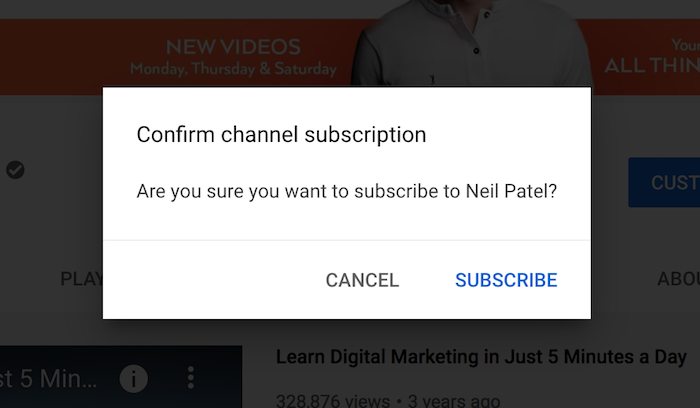
Once you click the link above, you’ll see a subscription box on YouTube… just click the “SUBSCRIBE” button.

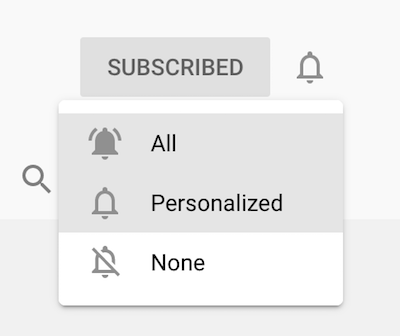
And once you click “subscribe” on my channel, you’ll notice a bell image next to the subscribe button.

When you click on the bell, you’ll be given a few options.

Click on the “all” option. Once you do that, you’ll notice that next to the “subscribe” button your bell icon should look something like this:

This will make it where YouTube notifies you when I release a new SEO Unlocked lesson.

Conclusion

If you really want more search traffic and you want to take SEO seriously, this is your chance.

There is no excuse for not having the financial resources because the course is free. If you put in the time, my team and I are here to teach and train you on everything you need to know.

And don’t worry, we aren’t going to bore you with every Google algorithm factor or anything like that. Instead, we are going to teach you the main concepts and strategies of SEO that drive the majority of the results as we know that you don’t have 40 hours a week to dedicate to SEO.

That’s why the videos are short and you should be able to watch all of them and get your homework assignments done in less than 90 minutes per week.

That’s all I am asking for you.

So, are you ready to learn SEO?

The post Welcome to SEO Unlocked: Your Free SEO Training Course appeared first on Neil Patel.


* This article was originally published here

Monday, 4 May 2020

How We Ranked a Single Page for 2.6K Keywords Driving 30K Monthly Searches [Case Study]

Posted by KristinTynski

For the last decade, I’ve touted the enormous long-term value of a dualistic approach to content marketing for SEO.

By leveraging data-centered campaigns, paired with personalized outreach to top publishers, we regularly garner earned media placements for our clients.

In rare cases, we create content that generates results so far beyond what was anticipated that a single project can greatly move the needle.

I’m going to walk through one such instance to reveal how it all works together, what can be learned from this experience, and the type of result it can achieve.

While typically you need to invest in ongoing content generation and promotion, extraordinary examples like these demonstrate the impact this kind of work has over the long-term.

Content marketing + digital PR case study: ADT

ADT is a household name with good domain authority, providing a great base to start from.

We knew that the content we’d create would likely have a leg up in terms of ranking potential, especially if that content addressed many potential high-intent keywords.

Content production

After speaking with ADT, we determined our joint goal was to create a piece of content that could earn dozens to hundreds of links from top publishers, with another focus on earning links from local news publications.

The client had the idea to create a crime map tool for ADT.com, and it fit the bill for everything we typically look for in a piece of content. But for the purpose of this article, I’ll examine what makes it ideal.

Say you were starting from scratch. You can start with a simple Google search of “crime,” which would serve as a reminder of how localized the topic is.

Just from this search alone, you can identify the desire for crime maps specifically, and you can consider why someone would search for a crime map:

  • To identify crime in their area
  • To investigate the crime in places they’re looking to visit
  • To investigate the crime in places they’re looking to move

Because people might not want to know just about the areas right around where they live, it was a strong idea to create a comprehensive, interactive crime mapping tool that gives users the ability to search local areas and see detailed, local-level crime statistics.

This concept had a high chance of success for other reasons as well, including:

1. It has a practical use. Not all content necessarily needs to be practical — it depends on the industry you’re in and whether you can get by with entertainment value. If it’s not practical, it should reveal insights that speak to the human experience and inform a reader about their context in the world. We actually added this element in the crime map project by building in functionality where you can compare the crime rate in your area to national averages.

However, having a practical element (or actionable advice) means your content has built-in value. It communicates that you care about the person reading it, and they engage with the content more because they feel like they can do something with the information.

2. It's data-based, making it authoritative and accurate. It’s very difficult these days to pitch publishers anything that isn’t data-based. Not only does it add credibility to what you’re working on, but showing that you did your research also indicates that you’re an authority (or becoming an authority) on the subject. I’ll dive into more on this toward the end of the article.

3. The data can be tailored to countless local angles. If your goal is to build as many valuable links and as much general brand awareness as possible, you should always consider how to localize your content. 

This has to happen at the beginning when you’re collecting your data. Ask yourself: Is the data set comprehensive enough that insights about different segments, like geographic locations, can be gathered? The more people who can connect with and “see” themselves in your content by having it be as personalized as possible, the better.

4. It invokes emotions like safety and concern for loved ones. Tapping into emotional concepts is always a good strategy when creating content. Crime and security inherently come with some obvious emotions: fear, concern, pride in protecting your family, etc. If you’re in a niche that doesn’t seem to have straightforward ties to emotion, ask yourself these questions to reveal the emotions at work in the background:

  • Why do people care about this?
  • What is our audience’s biggest struggle?
  • What might our audience worry most about?

For example, while it doesn't seem so on the surface, personal finance can be extremely emotional. It involves the way people lead their lives and is tied to the guilt of not saving enough, the pride of being on top of their finances, the fear they won’t have enough money to retire, etc. No matter what vertical you’re in, there are emotions involved, and tapping into them with empathy can make your content exponentially more compelling and helpful.

5. As a security company, it makes perfect sense for ADT to be the brand that’s offering a resource where people can check the crime rates all over the country. When you have this sort of brand alignment with an idea, it's clear to publishers and readers alike why the brand created it, and it helps build trust.

Always consider these types of criteria when you move forward on a content concept.

Digital PR

Because of the local/regional aspect of the interactive, our outreach approach was to pitch regional news publishers with the exclusive coverage.

We customized pitches for publishers by state for our initial outreach. Here is a sample pitch similar to the one that successfully landed coverage:

Hi [Website Name] team,

In the wake of natural disasters like Hurricane Florence, fears of looting and other forms of crime are often heightened. The newly released ADT crime map wants residents to be aware of crime hot spots in their neighborhoods and use precautionary measures to prevent being victims of crime, especially during hurricane season.

The interactive map allows users to look up specific crime data and compare it to national averages to determine how much crime is happening in their area. For example, Florida’s overall crime rate is 1.21x higher than the national average. That said, the murder rate is relatively low when compared to the rest of the nation (0.03x less).

To explore your city using the ADT Crime Map, please visit https://www.adt.com/crime.

Interested in covering this so that your readers can stay as safe as possible under any circumstance? If so, feel free to use this press release or graphics from the map. We just ask that you attribute ADT by linking to the Crime Map somewhere in your coverage.

Best,

[Your Name]

Each pitch was personalized by adjusting the first and second paragraph to include locally relevant details for that area.

This regional outreach strategy had a high chance of success because:

  • The content was highly relevant to local news publishers
  • Local news publications are often the best syndicators
  • We put together a new, exclusive resource that many consumers would find helpful
  • Offering content as an exclusive makes it especially newsworthy and appealing to writers

In this case, the exclusive was given to ABCActionNews.com, a Tampa Bay, Florida ABC affiliate.

Luckily, the publisher liked the story so much, they decided to include it in that day’s nightly news coverage. As one of the largest local news affiliates in that area, this coverage was likely seen on over 25,000 local televisions.

We continued pitching the story, attempting to exhaust our pitch list and support syndication of the exclusive picked up by ABCActionNews.com.

After roughly a month, we compiled a report on all coverage and syndications. We were happy to report to our client that the story was picked up by dozens of local news publishers, eventually generating links from 127 unique linking domains per Ahrefs.

The impact on search

A graph of acquired links shows a very organic progression — something we see often when a story syndicates well across many domains.

Almost immediately the page began ranking — likely a result of the ADT site’s awesome existing domain authority, topical relevance of the project related to the domain, and the massive injection of new unique links to the crime maps page.

Don’t have high domain authority?

While having an authoritative brand can make this whole strategy a bit easier, that doesn’t mean it can’t work for you if you are newer or are trying to keep up with huge, household-name competitors.

It just means it’s even more important that you use data-focused content. We’ve always thought that using data as a foundation for content was the best way to build authority, but a recent study we did with BuzzStream about authoritative content confirmed that.

Having an authoritative methodology can increase the chances people trust your content — and thus your brand — by extension. And when you’re trying to get attention in competitive spaces, every authority signal matters.

Regarding promotions, all of the tips I’ve provided in this article should work for you. Perhaps when pitching, you can provide a sentence or two describing your brand. It’s also best practice to have someone at your company, either the person who knows the most about the topic or the person who did the research, ready to answer questions that writers may have about the content.

But in general, promotional success will be heavily based on the quality of the content you’re pitching, especially if the writer isn’t familiar with who you are.

Conclusion

Is this type of strategy easy? No. It’s much simpler to pay for links or churn out quick blog posts.

But if you’re looking for long-lasting, sustainable, never-to-be-penalized, link-and-authority-building content, this is your best route.

As we can see here, a combination of existing domain authority, an injection of a large number of new high-authority links, and a topically relevant/related piece of content for the brand can generate huge numbers of new ranking keywords extremely quickly.

If you don’t have that level of domain authority, don’t worry! This strategy can still work for you — just don’t expect it to happen overnight (as that’s so rarely the case for anyone).

It’s an investment, but as we’ve seen time and time again, it pays off exponentially.


To learn more about keyword research, visit the Keyword Research Master Guide!

THE KEYWORD RESEARCH MASTER GUIDE


Sign up for The Moz Top 10, a semimonthly mailer updating you on the top ten hottest pieces of SEO news, tips, and rad links uncovered by the Moz team. Think of it as your exclusive digest of stuff you don't have time to hunt down but want to read!


* This article was originally published here

Saturday, 2 May 2020

Announcing: The Keyword Research Master Guide

Posted by Cyrus-Shepard

Why a new guide?

Often in SEO, we get so preoccupied with technical SEO (pagination, site speed, the latest Python course, etc.) that we forget the basis of winning SEO begins and ends with keywords.

  • Not choosing keywords before you start with SEO means shooting in the dark — a likely losing gamble if your content will succeed or not.
  • Choosing the wrong keywords means wasting your time and budget on content that will never gain visibility in search results.
  • Conversely, choosing smart, targeted keywords can help carve out and dominate a traffic niche that raises you above the competition.

No doubt, the difference between good SEOs and mediocre SEOs is often their keyword research strategy.

Here at Moz, a question we often hear after people finish reading the famous Beginner's Guide to SEO is: What do I read next?

To give people a practical place to start, we wanted to provide you with concrete keyword research workflows. It's as if you're looking over our shoulder as we do strategic keyword research.

We also included a few intermediate-to-advanced concepts, such as keyword grouping, understanding keyword priority, and on-page keyword optimization.

And finally, we wanted to make sure it was free.

If you want, feel free to jump to the guide now, or read below about what the guide covers and how it differs from any other guide on keyword research.

THE KEYWORD RESEARCH MASTER GUIDE

1. Understanding seed keywords

We call them "seed" keywords because all your other keywords grow out of them. Finding the right seed keywords will absolutely make or break your entire keyword research strategy.

Finding the right seed keywords is about asking and answering three key questions:

  1. What do you think you want to rank for?
  2. What do you already rank for?
  3. What do your competitors rank for?

After this, you validate your answers with data to find the absolute best seeds.

We also show you the exact process and tools we use to extract these seeds, such as Google Search Console (shown below).

The cool thing about seed keywords is this: they grow more seeds! Once you find the right seeds, you can reiterate the process again and again to grow a complete keyword strategy for an entire site, even one that's thousands of pages.

Read Chapter 1: Seed Keywords

2. Building perfect keyword lists

This is where the rubber hits the road. Here you expand your seed keywords into complete lists. These lists support multiple pages and topics, and can even grow more seeds.

This is also the place you want to be as comprehensive as possible, in order to uncover the opportunities your competition probably missed.

Read Chapter 2: Keyword Lists

3. Prioritizing keywords

Nearly any old keyword tool can give you lists of hundreds or thousands of keywords. The secret to success is knowing which keywords to prioritize and pursue.

Which keywords will actually prove profitable? Which keywords can you actually rank for?

To answer these questions, we do a deep dive into the keyword metrics that help us to prioritize our keyword lists:

  • Relevance
  • Monthly volume
  • Keyword difficulty
  • Organic click-through rate (CTR)
  • Priority

Understanding how to use these metrics goes a long way in choosing the exact right keywords to invest in.

Read Chapter 3: Prioritizing Keywords

4. Grouping keywords

Keywords never exist in a vacuum. Instead, they almost always appear with other keywords.

Adding related keywords to a page is a smart strategy for increasing topical relevance. At the same time, trying to target too many keywords on the same page may dilute their relevance and make it more difficult to rank.

Here, we show you techniques to address both of these problems:

  1. When to create separate pages for each keyword
  2. How to group related keywords together

We'll also show you some grouping tips to help set you up for your next task: on-page keyword optimization.

Read Chapter 4: Grouping Keywords

5. On-page keyword optimization

Very few keyword research guides ever even mention on-page keyword optimization.

We wanted to do better.

Because keyword research uncovers intent, this is a great starting point for on-page optimization. If you understand not only what your users are searching for, but also what they expect to find, you can better create your content to satisfy their expectations.

We've also included a brief overview of where and how to incorporate keywords on the page. While this section is mostly beginner level, more immediate SEOs should find the refresher useful.

Read Chapter 5: On-page Keyword Optimization

6. Tracking keyword rankings

If you’re a consultant, agency, in-house SEO, or simply work for yourself, you want to know how your keywords perform in search engines.

Traditionally, keyword tracking was synonymous with "ranking" — but times have changed. Today, with personalization, localization, and shifting competitive environments, keyword tracking has grown much more sophisticated.

In this chapter, we'll cover:

  1. Traditional keyword ranking
  2. Local rank tracking
  3. Rank indexes
  4. Share of Voice (SOV) and visibility

By the end of this chapter, you'll understand which type of keyword tracking is right for you, and how to report these numbers to the people who matter.

Read Chapter 6: Tracking Keyword Rankings

7. Keyword research tools and resources

Bonus time!

We couldn't squeeze everything in the previous chapters, so we added all our extra resources here. The crème de la crème is the Keyword Research Cheat Sheet. You can download, print, share with your team, or pin to your wall.

We've also made a handy list of our favorite keyword research tools, along with a few other useful resources on keyword research.

THE KEYWORD RESEARCH MASTER GUIDE

We hope you enjoy! Let us know what you think in the comments below.


Sign up for The Moz Top 10, a semimonthly mailer updating you on the top ten hottest pieces of SEO news, tips, and rad links uncovered by the Moz team. Think of it as your exclusive digest of stuff you don't have time to hunt down but want to read!


* This article was originally published here