Wednesday, 13 November 2019

My 6-Step Content Marketing Formula That Drives 3,549 Visitors

Writing a blog post is easy.

If you don’t write often, you may feel otherwise, but just follow this and you’ll be good to go when it comes to writing. Or, you can just watch the video below.

But still, you write a blog post and then what do you do?

Well, I’ll tell you this… most people forget the “marketing” in content marketing. Most people write content but don’t do a great job of promoting it.

Here’s the thing: I figured out the perfect formula to promoting content.

Best of all, it’s not complex. Heck, it doesn’t even take 30 minutes. It’s so easy that I broke it down into 6 steps.

And just to give you an idea before we dive into the formula, it’s so effective here is the traffic to my latest blog post.
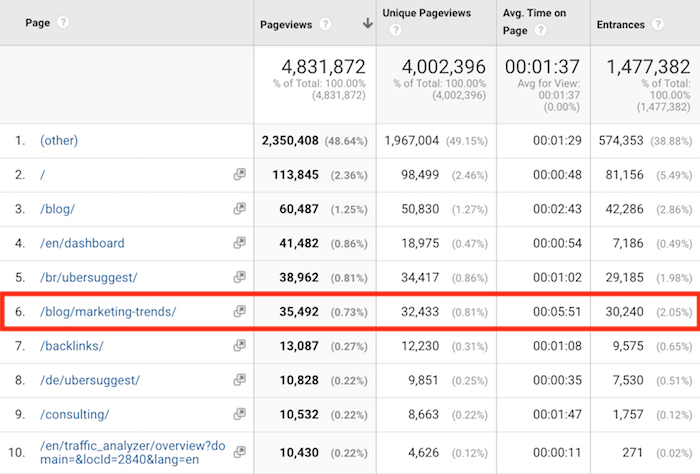
35,492 visits in a week isn’t too shabby. The post didn’t do exceptionally well and it didn’t tank. It was just an average post.

Now you probably won’t see the same results as me as I’ve been doing this for a long time, but your results will be much better than what you are currently getting. Hence, I used the number of 3,549 in the title as you should be able to drive 1/10th of what I am generating.

So, let’s dive right into the formula.

Step #1: Optimize your headline

8 out of 10 people will read your headline, but only 2 out of 10 people will click through on your headline to read the rest of your article.

No matter how well written your content is, promoting it won’t be effective if no one likes your headline.

Now I know what you are thinking… I’ve already published my article, is it too late to change my headline?

Nope, you can always change your headline, just try not to change the URL of the article once it is already published. And if you decide to change the URL, use a 301 redirect.

There’s a really simple way to come up with headlines that work. Heck, it doesn’t even take more than a minute or two.

Just head over to Ubersuggest and type in the main keyword or phrase your article is about.

You’ll see a report that looks something like this:
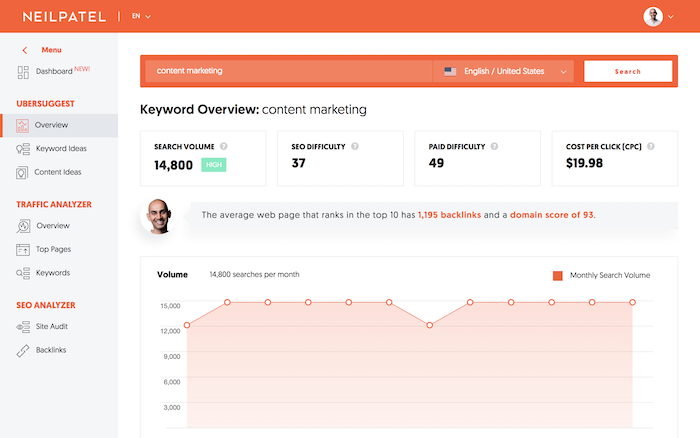
Now I want you to click on “Content Ideas” in the left-hand navigation.

You should now see a report that looks like this:
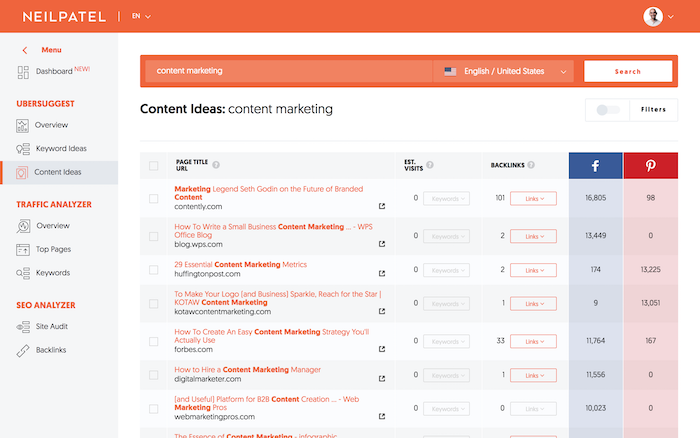
This report shows you all of the blog posts around the web that contain your keyword or phrase within their title. And it breaks it down by social shares, backlinks, and search traffic.

You can use this to see what is working in your space.

Ideally, you want to look for headlines that have thousands of social shares (or hundreds if you aren’t in a popular industry), at least 10 backlinks, and more than 100 estimated visits. Just like the example below.
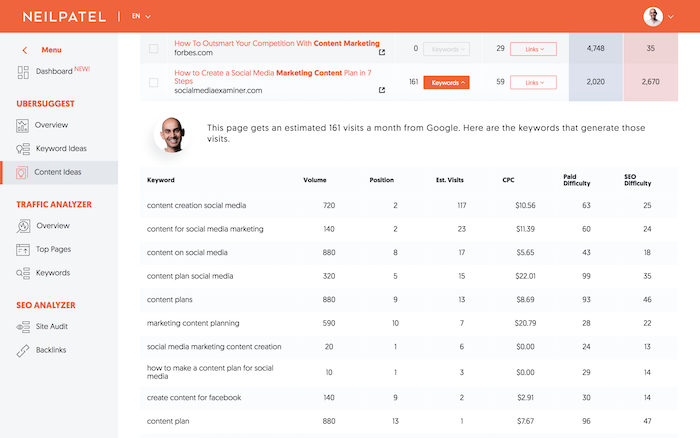
Making your headlines similar to ones that meet those 3 criteria will increase your odds of getting more traffic.

Step #2: Add 3 internal links

The easiest way to get your new content more love is to build links.

Yes, links are hard to build, but internal links are not… plus they are still effective.

I rank for competitive terms like “digital marketing”…
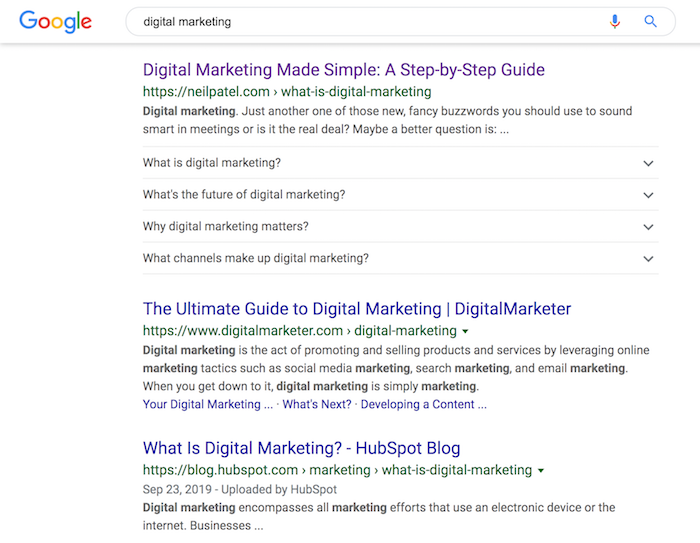
A lot of it has to do with internal links. I link to my main digital marketing page within my sidebar and within my content.
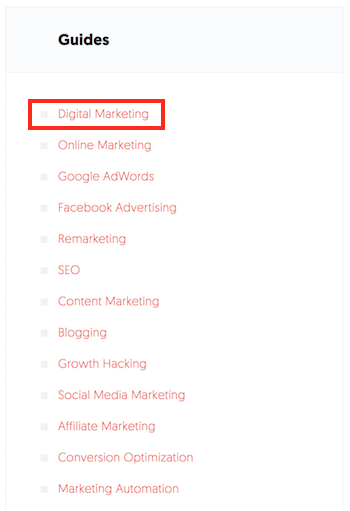
Every time you publish a new blog post, I want you to go into your older content that is relevant to your newly published blog post and add a link to it. Do this to 3 of your older blog posts.

This helps with indexing and it also helps your new content rank higher on Google.

Step 3: Share your content on the social web carefully

The problem with social media marketing is that people think they can just share their content on sites like Facebook or LinkedIn and it will automatically do well.

Sadly, it won’t because billions of URLs have been shared already.

In other words, we just tend to ignore most of the links people share.

But there is a simple way to stand out and get thousands of visitors from the social web, just like I get.
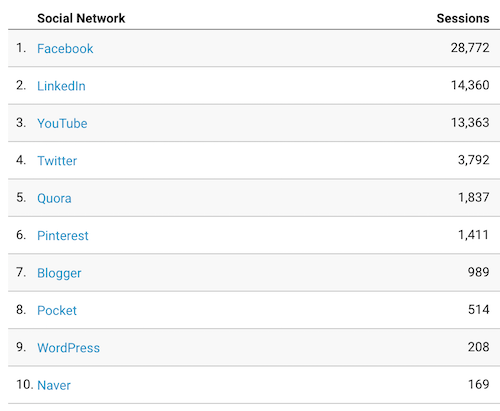
So, what’s my secret?

Well, I will give you a hint. Just look at one of my most recent posts on LinkedIn:
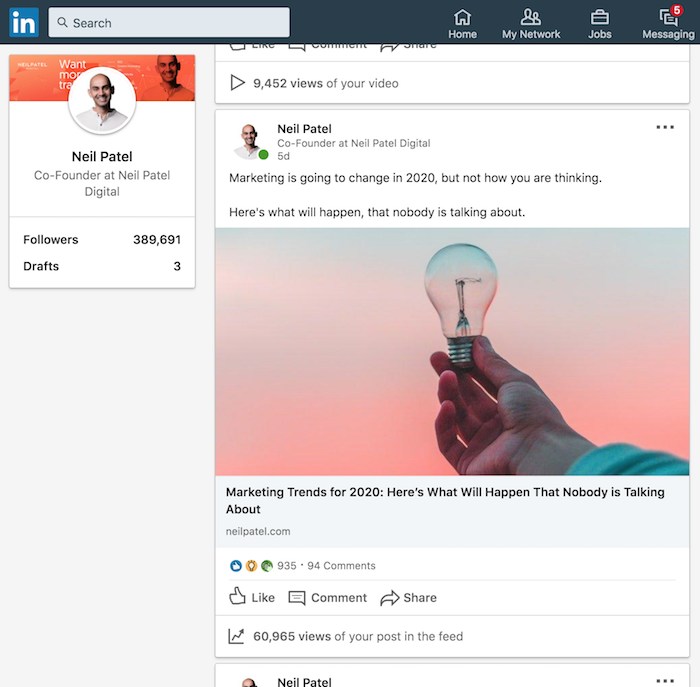
And here is one from Facebook:
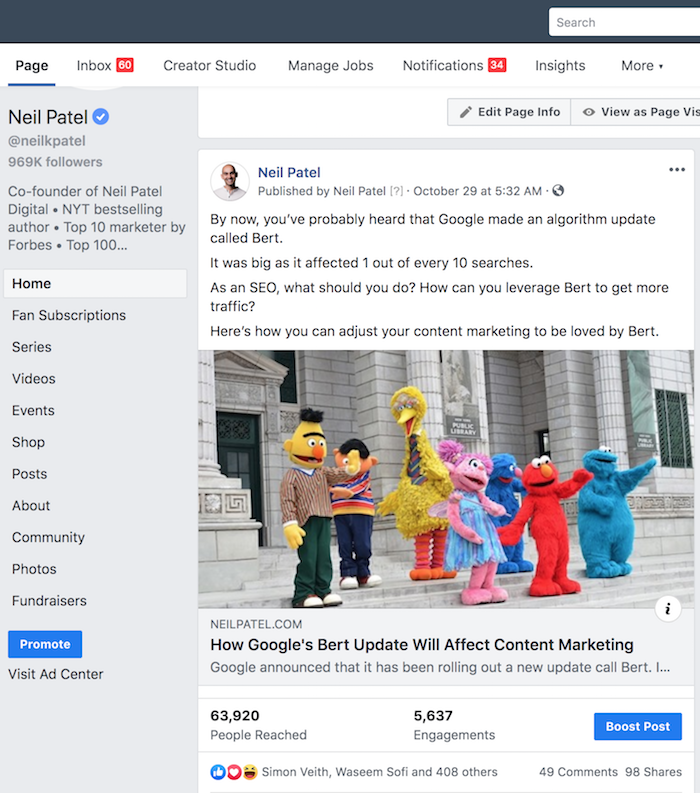
Do you notice a pattern?

I’m evoking curiosity. In other words, I am piquing your interest and if you want to know the “solution” you have to click through to my site.

With the LinkedIn post, I tell you that marketing is going to change next year. I also make a point to say how it is going to change in a way that nobody is talking about.

I do this because we all can assume marketing will change. But by saying it is in a way nobody is talking about, it evokes curiosity. And if you want to know how it will change you have no choice but to click through over to my site to read the rest.

With my Facebook post, I also evoke curiosity. I talk about a Google algorithm update, but I hint that I have an answer to leveraging Google’s latest algorithm update. And if you want to know what it is, you have to click through over to my site.

Whenever you post on the social web, evoke curiosity if you want people to head over to your site.

The easiest way to do this is that every time you share one of your articles on the social web, add a few sentences above the link that helps pique peoples’ interest.

Step #4: Message everyone you link out to

It’s common to link out to other sites within your blog posts.

Heck, sometimes I even link out to my competition.

If you don’t ever link out to other sites, you are making a big mistake. It helps with authority and trust.

If you are using stats and data within your article, you want to cite your sources. This brings credibility to you and it helps brand yourself as an expert which can help with Google’s medic update.

Now, when you link out to a site, go and search their email address. You can typically find their email address on their website.

Or if you can’t find their email address, look for a contact page on their site, you’ll typically see a form that you can fill out.

Whether you find an email address or contact form, I want you to message each and every single site you link out to with a message that goes like this:

Hi [insert their first name],

I just wanted to say, I love your content. Especially your article on [insert the name of the article you linked out to].

I linked to it from my latest blog post [insert URL of your blog post]. It would make my day if you checked it out and even shared it on your favorite social network if you enjoyed it.

Cheers,

[insert your name]

When I send out these emails, I am getting 50 to 60% of the people to respond and share my content. But of course, my blog is popular, so for me, it isn’t too hard. But it hasn’t always been that way, and I’ve been leveraging this tactic for ages.

On the flip side, I also use this tactic on a few of my blogs that are in other niches and don’t use my name (no one knows I own them) and I am seeing success rates around 20%.

Just make sure you don’t use this tactic to ask for a link back. Your success rate will be slim.

Step #5: Send an email blast

These last two tactics produce a large portion of my results, and you shouldn’t take them for granted, no matter how basic they may seem.

If you already haven’t, start collecting emails from your site. You can use free tools like Hello Bar to create popups or sliders.
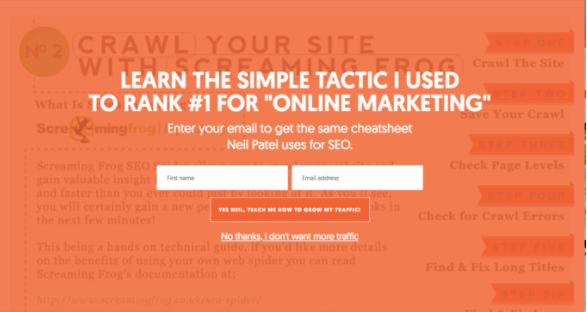
Hello Bar will plug into whatever email provider you are currently using.

Once you are up and running, every time you release a new blog post, send out an email blast.

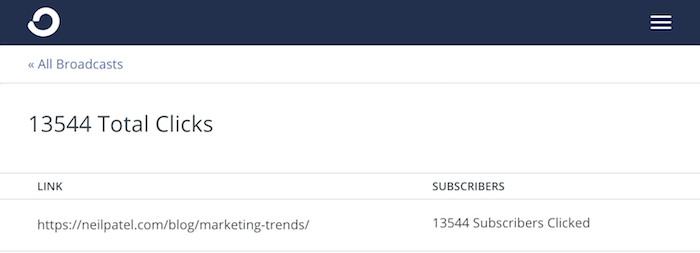
Here’s an example of one of my email blasts.
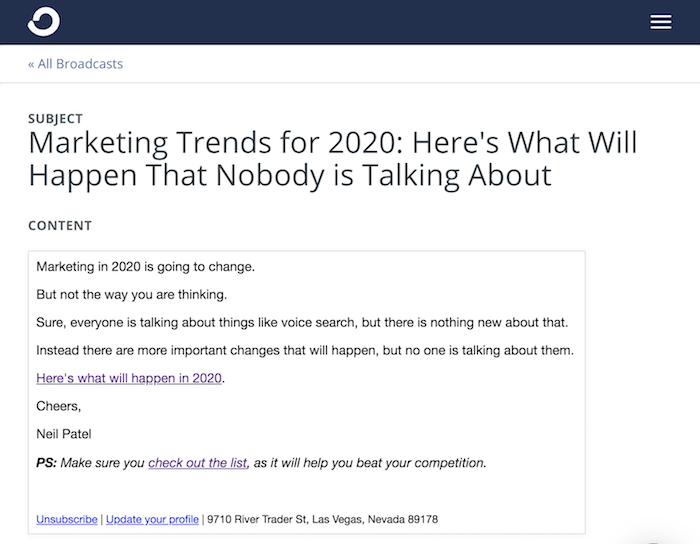
It’s so effective it generated 13,544 clicks.
I’ve found that you can drive good traffic from emails as long as you do the following:

  1. Scrub your list – if someone doesn’t open your emails over the last 30 or 60 days, remove them from your list. It helps keep your emails in people’s inboxes.
  2. Send text-based emails – if you look at the email I sent, I keep it simple. No images, nothing fancy, just text and a link back to my site. It’s that simple.
  3. Evoke curiosity – just like how I explained with the social media posts, your emails won’t do well unless you evoke curiosity.

As you write more content you will get more traffic, which will cause your email list to grow. That will also cause you to get more traffic. 🙂

Step #6: Send a push notification

I don’t know why so few sites are leverage push notifications. It’s so effective I believe I will get more traffic from push notifications in 2020 than I will from email marketing.

To give you an idea, when I analyze my competitors in the marketing arena, only 3 out of 19 use push notifications.

In other industries, the percentage is far worse, which means there is more opportunity for you.

Here’s how push notifications work….

Someone comes to your site and through their browser, they get a message if they want to subscribe to your site.
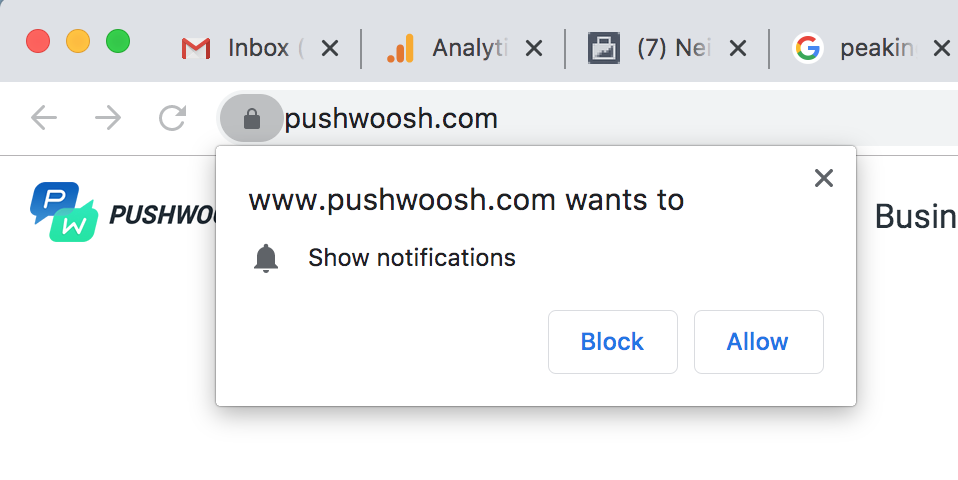
A portion of your visitors will click “allow”. With NeilPatel.com, roughly 5.4% of visitors are currently clicking “allow”.

You can send push notifications and get subscribers using a free tool like Subscribers.com.

And then when you write a new blog post, you log into Subscribers.com and click on the “Create Notification” button. From there you will see a screen where you can enter the title and description of your latest post.
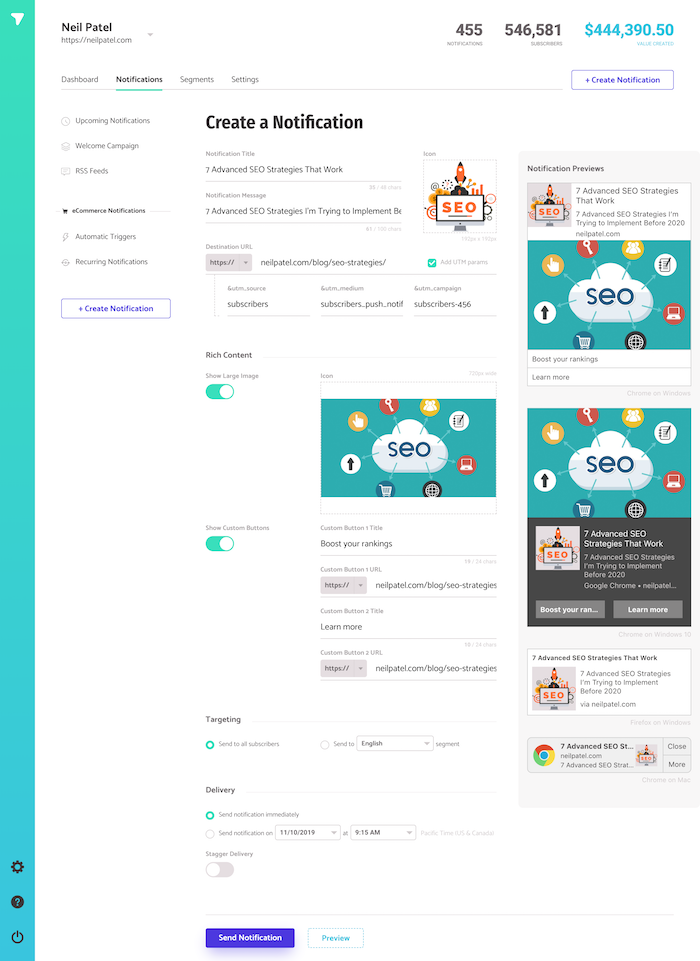
As you can see from the image above, you’ll notice that I use an “icon” image, a “large” image, and I show “custom buttons.”

Using those 3 elements is the key to getting the most traffic from push notifications. Here are some of my stats from using Subscribers.
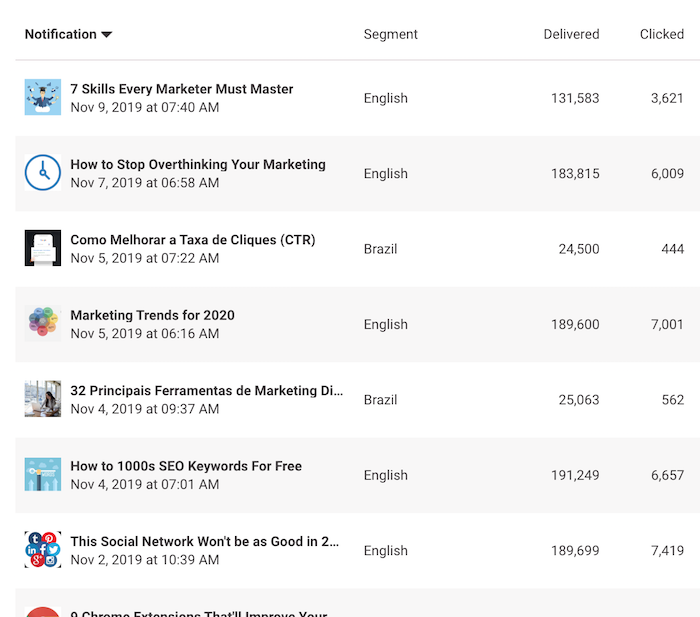
I’m getting roughly 6,000 visits from every push notification I send. That’s not too bad.

And if you are curious about what a push notification looks like, here’s what people get when I send it out.
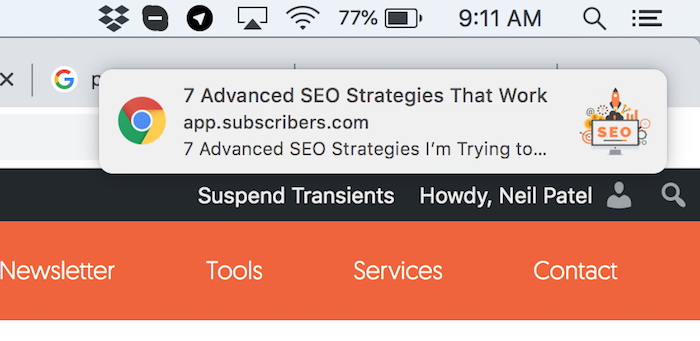
What’s cool about push notification is no matter what website someone is on, they will see a message similar to the one above, which will bring people back to your site.

No dealing with spam filters or messages not going through. Plus, if someone isn’t online when you send a push notification, the next time they use their web browser they will see your message.

Conclusion

Promoting your content doesn’t have to be hard.

You don’t need “advanced” tactics or anything that is out of the box. The basics work well, and I have been using the above formula for years… literally.

Now, I know there are other things you can do to promote your content, but let’s be realistic: we are all strapped for time. And I’ve found the ones I’ve mentioned above to produce the biggest bang for the buck.

So, what other simple ways do you promote your content?

The post My 6-Step Content Marketing Formula That Drives 3,549 Visitors appeared first on Neil Patel.


* This article was originally published here

Tuesday, 12 November 2019

The Marketing Tactics People Love (And Love to Hate) [Exclusive Survey]

Posted by amandamilligan

I’ve always considered the most challenging part about digital marketing to be prioritizing.

There are hundreds of tactics available to you, and it can be overwhelming to determine which of them are most appropriate for your marketing goals and your target audience. (And we all know what happens when you try to do too much — you do it all poorly.)

It’s critical to analyze the attitudes and behaviors of your current and potential clients/customers in order to best communicate with them in the methods they prefer.

But every now and then, it’s also helpful to zoom out and see how different marketing tactics are faring in general.

That’s why we surveyed 500+ Americans, asking them their thoughts on a variety of inbound and outbound marketing tactics.

Our objective was to better understand which tactics might be most effective on a broad scale and how people might feel about the various tactics they encounter.

Here are the biggest insights.

1. Very few channels "die"

Here’s the thing: The marketing industry experiences a constant ebb and flow. A tactic like email marketing becomes popular, everyone does it, the space becomes diluted, and then other tactics start to gain traction as people seek out “quieter” channels.

That doesn’t mean those tactics no longer work. It just means it becomes harder for your message to be seen because the volume of content out there for people to read is expansive. You have to work harder for it, have an intimate understanding of the information your audience wants, and test relentlessly.

Fractl surveyed 500+ people and asked them, "What is the most effective way for a company to attract your business?" The top result at 54.33% was "Appearing in search results when I'm looking for something I need or want." The bottom result at 20.71% was "Being promoted or endorsed by an influencer on social media or elsewhere."

The prime example of this revealed in this survey is that when asked what people think is the best way to attract their business, they picked snail mail (53.31%) over email (38.37%).

A couple of years ago, I’d never have thought to consider direct mail over email. It’s costly and people tend to find mail cumbersome, sending a lot of it straight to the trash.

But over time, some have started to feel that way about email. It’s hard to filter out all of the spam, discern between good pitches and bad ones, and just sort through what feels like an endless stream of messages. Direct mail has started to feel more like a novelty. In fact, 28% of our respondents said they’ve never clicked on the “Promotions” Gmail tab.

The takeaway: Don’t let anyone tell you a channel is dead (except for maybe MySpace and other sites that are abandoned.) Take advantage of “quiet” channels but only if it makes sense for your audience. Focus on them, and the appropriate channel for you will become more obvious.

For example, some brands are seeing success endeavoring into the print magazine realm, a “quieter” channel that appeals to their specific audiences. (And how many times have we heard that print is dead?)

2. Don't seem intrusive

Privacy has certainly been a hot topic these days, but we shouldn’t be focusing solely on GDPR and other regulations (that’s where don’t be intrusive comes in). It’s not just about what’s legal — it’s also about what’s off-putting. Unsurprisingly, people don’t like to feel like they’re being oddly approached or “followed” online (or anywhere).

That probably explains why our survey found that of the 78% of people who said they notice retargeted ads, 56% have negative feelings toward them. That’s a pretty large amount of negativity for a tactic. In a separate question, 53% said they have ad blockers, choosing to bypass ads altogether.

Outbound marketing is about reaching out to people cold, but there’s an art to this.

Fractl surveyed 500+ people and asked them if they felt positively, negatively, or neutrally about different marketing tactics. Website and blog articles had the best sentiment. Website ads had the worst sentiment.

Traditional advertising achieves No. 2 on the sentiment scale, and my interpretation of this is that people are so used to seeing advertisements on television and hearing them on the radio that it no longer has an intrusive vibe.

Email, sponsored social media posts, and ads still can carry that feeling, though.

Does that mean you shouldn’t utilize these tactics? Of course not. It does mean you have to be very strategy in applying them, though, or you’ll turn off your audience almost immediately.

The takeaway: When utilizing outbound strategies, make sure the recipients understand why they’re receiving the information and ensure what you’re providing speaks to a want or need of theirs. Make the value you’re providing immediately clear.

For example, I made a reservation at an Italian restaurant called Osteria Morini about a year ago. I received an email from them with the subject line “Fall Pasta Classes are Here!” Even though I didn’t remember signing up for their updates, I opened the email because I knew exactly what they were trying to tell me and I was interested. I also just went back and checked; they’ve only emailed me once since the reservation. That’s an extreme — I don’t advocate you sending one email a year — but only send emails with real value.

3. Prioritize search

It shouldn’t come as a huge surprise that search engine optimization won out as one of the strongest strategies out there.

Notice in the first graph in the article that appearing in search results was listed as the best way to earn respondents’ business, and in the second graph, you’ll see that reading the type of content you’d find on those results carries the best sentiment.

Not only is it effective, but it’s also a common practice.

Fractl surveyed 500+ people and asked them, "In the last week, have you done any of the following?" The top result at 89% was "Used online search to find information about a company or product." The bottom result at 30.4% was "Read a company or brand blog post."

Using search engines to find answers is essentially an inherent online experience; nearly everyone does it, and if you’re not showing up in the SERPs, you can be missing out on massive opportunities to increase your brand awareness, connect with potential clients/customers, and build authority in your space.

I’d say authority is a huge piece of why search is so important to people. When you rank highly, it’s almost like the online equivalent of being published — “people” (other sites and Google) — vouch for you.


Fractl surveyed 500+ people and asked them, "How do you learn about a company or product?" The top result at 86.4% was "Do an online search." The bottom result at 15.8% was "Download content from their site."

The authority piece is greater represented in the graph above. Reading customer reviews comes in right behind performing searches for how people learn more about a company or product, because people are constantly looking for authority and quality indicators in order to make the best decisions possible. (This is why E-A-T has been such a hot topic lately.)

The takeaway: SEO should always be a primary objective of your marketing team. If you’re in a competitive space and finding it difficult to rank for your target keywords, focus on the long-tail for queries that are directly relevant to your business. That way, you’re building authority with people who are already close to becoming customers/clients.

For example, when searching for daily planners, I noticed there are a few related keywords regarding daily planners that start as early as 5 a.m. The Better Dayplanner has an article that ranks for these types of keywords, meaning that people looking for something very specific will see them first. Sure, the search volume is low, but the traffic is as relevant as you can get.

Conclusion

After reading through this article (and reviewing the full inbound and outbound marketing survey), you can get a sense of which of your tactics may need modifying and which opportunities may be present. There’s no universally right or wrong answer; it’s highly dependent on the specifics of your brand and your target audience. But knowing general trends and preferences can help you shape your strategy so it’s as effective as possible.


Sign up for The Moz Top 10, a semimonthly mailer updating you on the top ten hottest pieces of SEO news, tips, and rad links uncovered by the Moz team. Think of it as your exclusive digest of stuff you don't have time to hunt down but want to read!


* This article was originally published here

Saturday, 9 November 2019

What Is BERT? - Whiteboard Friday

Posted by BritneyMuller

There's a lot of hype and misinformation about the new Google algorithm update. What actually is BERT, how does it work, and why does it matter to our work as SEOs? Join our own machine learning and natural language processing expert Britney Muller as she breaks down exactly what BERT is and what it means for the search industry.

Click on the whiteboard image above to open a high-resolution version in a new tab!

Video Transcription

Hey, Moz fans. Welcome to another edition of Whiteboard Friday. Today we are talking about all things BERT and I'm super excited to attempt to really break this down for everyone. I don't claim to be a BERT expert. I have just done lots and lots of research. I've been able to interview some experts in the field and my goal is to try to be a catalyst for this information to be a little bit easier to understand. 

There is a ton of commotion going on right now in the industry about you can't optimize for BERT. While that is absolutely true, you cannot, you just need to be writing really good content for your users, I still think many of us got into this space because we are curious by nature. If you are curious to learn a little bit more about BERT and be able to explain it a little bit better to clients or have better conversations around the context of BERT, then I hope you enjoy this video. If not, and this isn't for you, that's fine too.

Word of caution: Don't over-hype BERT!

I’m so excited to jump right in. The first thing I do want to mention is I was able to sit down with Allyson Ettinger, who is a Natural Language Processing researcher. She is a professor at the University of Chicago. When I got to speak with her, the main takeaway was that it's very, very important to not over-hype BERT. There is a lot of commotion going on right now, but it's still far away from understanding language and context in the same way that we humans can understand it. So I think that's important to keep in mind that we are not overemphasizing what this model can do, but it's still really exciting and it's a pretty monumental moment in NLP and machine learning. Without further ado, let's jump right in.

Where did BERT come from?

I wanted to give everyone a wider context to where BERT came from and where it's going. I think a lot of times these announcements are kind of bombs dropped on the industry and it's essentially a still frame in a series of a movie and we don't get the full before and after movie bits. We just get this one still frame. So we get this BERT announcement, but let's go back in time a little bit. 

Natural language processing

Traditionally computers have had an impossible time understanding language. They can store text, we can enter text, but understanding language has always been incredibly difficult for computers. So along comes natural language processing (NLP), the field in which researchers were developing specific models to solve for various types of language understanding. A couple of examples are named entity recognition, classification. We see sentiment, question answering. All of these things have traditionally been sold by individual NLP models and so it looks a little bit like your kitchen. 

If you think about the individual models like utensils that you use in your kitchen, they all have a very specific task that they do very well. But when along came BERT, it was sort of the be-all end-all of kitchen utensils. It was the one kitchen utensil that does ten-plus or eleven natural language processing solutions really, really well after it's fine tuned. This is a really exciting differentiation in the space. That's why people got really excited about it, because no longer do they have all these one-off things. They can use BERT to solve for all of this stuff, which makes sense in that Google would incorporate it into their algorithm. Super, super exciting. 

Where is BERT going?

Where is this heading? Where is this going? Allyson had said, 

"I think we'll be heading on the same trajectory for a while building bigger and better variants of BERT that are stronger in the ways that BERT is strong and probably with the same fundamental limitations."

There are already tons of different versions of BERT out there and we are going to continue to see more and more of that. It will be interesting to see where this space is heading.

How did BERT get so smart?

How about we take a look at a very oversimplified view of how BERT got so smart? I find this stuff fascinating. It is quite amazing that Google was able to do this. Google took Wikipedia text and a lot of money for computational power TPUs in which they put together in a V3 pod, so huge computer system that can power these models. And they used an unsupervised neural network. What's interesting about how it learns and how it gets smarter is it takes any arbitrary length of text, which is good because language is quite arbitrary in the way that we speak, in the length of texts, and it transcribes it into a vector.

It will take a length of text and code it into a vector, which is a fixed string of numbers to help sort of translate it to the machine. This happens in a really wild and dimensional space that we can't even really imagine. But what it does is it puts context and different things within our language in the same areas together. Similar to Word2vec, it uses this trick called masking


So it will take different sentences that it's training on and it will mask a word. It uses this bi-directional model to look at the words before and after it to predict what the masked word is. It does this over and over and over again until it's extremely powerful. And then it can further be fine-tuned to do all of these natural language processing tasks. Really, really exciting and a fun time to be in this space.

In a nutshell, BERT is the first deeply bi-directional. All that means is it's just looking at the words before and after entities and context, unsupervised language representation, pre-trained on Wikipedia. So it's this really beautiful pre-trained model that can be used in all sorts of ways. 

What are some things BERT cannot do? 

Allyson Ettinger wrote this really great research paper called What BERT Can't Do. There is a Bitly link that you can use to go directly to that. The most surprising takeaway from her research was this area of negation diagnostics, meaning that BERT isn't very good at understanding negation


For example, when inputted with a Robin is a… It predicted bird, which is right, that's great. But when entered a Robin is not a… It also predicted bird. So in cases where BERT hasn't seen negation examples or context, it will still have a hard time understanding that. There are a ton more really interesting takeaways. I highly suggest you check that out, really good stuff.

How do you optimize for BERT? (You can't!)

Finally, how do you optimize for BERT? Again, you can't. The only way to improve your website with this update is to write really great content for your users and fulfill the intent that they are seeking. And so you can't, but one thing I just have to mention because I honestly cannot get this out of my head, is there is a YouTube video where Jeff Dean, we will link to it, it's a keynote by Jeff Dean where he speaking about BERT and he goes into natural questions and natural question understanding. The big takeaway for me was this example around, okay, let's say someone asked the question, can you make and receive calls in airplane mode? The block of text in which Google's natural language translation layer is trying to understand all this text. It's a ton of words. It's kind of very technical, hard to understand.

With these layers, leveraging things like BERT, they were able to just answer no out of all of this very complex, long, confusing language. It's really, really powerful in our space. Consider things like featured snippets; consider things like just general SERP features. I mean, this can start to have a huge impact in our space. So I think it's important to sort of have a pulse on where it's all heading and what's going on in this field. 

I really hope you enjoyed this version of Whiteboard Friday. Please let me know if you have any questions or comments down below and I look forward to seeing you all again next time. Thanks so much.

Video transcription by Speechpad.com


Sign up for The Moz Top 10, a semimonthly mailer updating you on the top ten hottest pieces of SEO news, tips, and rad links uncovered by the Moz team. Think of it as your exclusive digest of stuff you don't have time to hunt down but want to read!


* This article was originally published here

Friday, 8 November 2019

Finding Ideas for a Video Series or Podcast - Whiteboard Friday

Posted by PhilNottingham

Video and podcasts are only growing in popularity, proving to be an engaging way to reach your audience and find ways to talk about your industry or product. But it's a crowded market out there, and finding a good idea is only half the battle. Join video marketing extraordinaire Phil Nottingham from Wistia as he explores how we can both uncover great ideas for a podcast or video series and follow through on them in this week's episode of Whiteboard Friday.

Click on the whiteboard image above to open a high resolution version in a new tab!

Video Transcription

Howdy, Moz fans. My name is Phil Nottingham, and welcome to another edition of Whiteboard Friday. Today we're going to talk about how to come up with a great idea for your video series or podcast. I think a lot of businesses out there understand that there's just this great opportunity now to do a longer form series, a show in podcast or video form, but really struggle with that moment of finding what kind of idea could take them to the next level and help them stand out.

1. Audience

I think the most common error that businesses make is to start with the worst idea in the world, which is interviewing our customers about how they use our product. I'm sure many of you have accidentally fallen down this trap, where you've thought, "Ah, maybe that will be a good idea." But the thing is even if you're Ferrari or Christian Louboutin or the most desirable product in the world, it's never going to be interesting for someone to sit there and just listen to your customers talking about your product.

The problem is that your customers are not a unique group of people, aside from the fact that they use your product. Usually there isn't anything else that brings them together. For this kind of content, for a video series and podcast to really stand out and to grow in terms of their audience, we need to harness word of mouth. Word of mouth doesn't grow through the way we often think about audience growth in marketing.

Many of us, particularly in the performance marketing space, are used to thinking about funnels. So we get more and more traffic into the funnel, get more people in there, and ultimately some of them convert. But the way word of mouth works is that a small group of people start communicating to another group of people who start communicating to another group of people. You have these ever-expanding circles of communication that ultimately allow you to grow your audience.

How to find a niche audience

But that means you need to start with a group of people who are talking to one another. Invariably, your customers are not talking to each other as a kind of rule of thumb. So what you need to do is find a group of people, an audience who are talking to each other, and that really means a subculture, a community, or maybe an interest group. So find your group of customers and work out what is a subset of customers, what kind of community, wider culture they're part of, a group of people who you could actually speak to.

The way you might find this is using things like Reddit. If there's a subculture, there's going to be a subreddit. A tool like SparkToro will allow you to discover other topics that your customer base might be interested in. Slack communities can be a great source of this. Blogs, there's often any sort of topic or a niche audience have a blog. Hashtags as well on social media and perhaps meetup groups as well.

So spend some time finding who this audience is for your show, a real group of people who are communicating with one another and who ultimately are someone who you could speak to in a meaningful way. 

2. Insight

Once you've got your audience, you then need to think about the insight. What the insight is, is this gap between desire and outcome. So what you normally find is that when you're speaking to groups of people, they will have something they want to achieve, but there is a barrier in the way of them doing it.

This might be something to do with tools or hardware/software. It could be just to do with professional experience. It could be to do with emotional problems. It could be anything really. So you need to kind of discover what that might be. The essential way to do that is just through good, old-fashioned talking to people. 

  • Focus groups, 
  • Surveys, 
  • Social media interactions, 
  • Conversations, 
  • Data that you have from search, like using Google Search Console, 
  • Internal site search, 
  • Search volume 

That kind of thing might tell you exactly what sort of topics, what problems people are having that they really try to solve in this interest group.

Solve for the barrier

So what we need to do is find this particular little nugget of wisdom, this gold that's going to give us the insight that allows us to come up with a really good idea to try and solve this barrier, whatever that might be, that makes a difference between desire and outcome for this audience. Once we've got that, you might see a show idea starting to emerge. So let's take a couple of examples.

A few examples

Let's assume that we are working for like a DIY supplies company. Maybe we're doing just sort of piping. We will discover that a subset of our customers are plumbers, and there's a community there of plumbing professionals. Now what might we find about plumbers? Well, maybe it's true that all plumbers are kind of really into cars, and one of the challenges they have is making sure that their car or their van is up to the job for their work.

Okay, so we now have an interesting insight there, that there's something to do with improving cars that we could hook up for plumbers. Or let's say we are doing a furniture company and we're creating furniture for people. We might discover that a subset of our audience are actually amateur carpenters who really love wooden furniture. Their desire is to become professional.

But maybe the barrier is they don't have the skills or the experience or the belief that they could actually do that with their lives and their career. So we see these sort of very personal problems that we can start to emerge an idea for a show that we might have. 

3. Format

So once we've got that, we can then take inspiration from existing TV and media. I think the mistake that a lot of us make is thinking about the format that we might be doing with a show in a very broad sense.

Don't think about the format in a broad sense — get specific

So like we're doing an interview show. We're doing a talk show. We're doing a documentary. We're doing a talent show. Whatever it might be. But actually, if we think about the great history of TV and radio the last hundred years or so, all these really smart formats have emerged. So within talk show, there's "Inside the Actors Studio," a very sort of serious, long, in-depth interview with one person about their practice.

There's "The Tonight Show Starring Jimmy Fallon," which has got lots of kind of set pieces and sketches and things that intermingle with the interview. There's "Ellen," where multiple people are interviewed in one show. If we think about documentaries, there's like fly-on-the-wall stuff, just run and gun with a camera, like "Diners, Drive-Ins and Dives." Carrying on the food thing, there's "Chef's Table," where it's very planned and meticulously shot and is an exposé of one particular chef.

Or something like "Ugly Delicious," which is a bit more like a kind of exploratory piece of documentary, where there's kind of one protagonist going around the world and they piece it together at the end. So you can think about all these different formats and try to find an idea that maybe has been done before in TV in some format and find your way through that. 

A few more examples

So let's think about our plumber example. Plumbers who love cars, well, we could do "Pimp My Ride for Tradesmen."

That's an interesting idea for a talk. Or let's say we're going after like amateur carpenters who would love to be professional. We could easily do "American Idol for Lumberjacks or Carpenters." So we can start to see this idea emerge. Or let's take a kind of B2B example. Maybe we are a marketing agency, as I'm sure many of you are. If you're a marketing agency, maybe you know that some of your customers are in startups, and there's this startup community.

One of the real problems that startups have is getting their product ready for market. So you could kind of think, well, the barrier is getting the product ready for market. We could then do "Queer Eye for Product Teams and Startups,"and we'll bring in five specialists in different areas to kind of get their product ready and sort of iron out the details and make sure they're ready to go to market and support marketing.

So you can start to see by having a clear niche audience and an insight into the problems that they're having, then pulling together a whole list of different show ideas how you can bring together an idea for a potential, interesting TV show, video series, or podcast that could really make your business stand out. But remember that great ideas are kind of 10 a penny, and the really hard thing is finding the right one and making sure that it works for you.

So spend a lot of time coming up with lots and lots of different executions, trying them out, doing kind of little pilots before you work out and commit to the idea that works for you. The most important thing is to keep going and keep trying and teasing out those ideas rather than just settling on the first thing that comes to mind, because usually it's not going to be the right answer. So I hope that was very useful, and we will see you again on another episode of Whiteboard Friday.

Take care.

Video transcription by Speechpad.com


Sign up for The Moz Top 10, a semimonthly mailer updating you on the top ten hottest pieces of SEO news, tips, and rad links uncovered by the Moz team. Think of it as your exclusive digest of stuff you don't have time to hunt down but want to read!


* This article was originally published here

Wednesday, 6 November 2019

Marketing Trends for 2020: Here’s What Will Happen That Nobody is Talking About

The new year is right around the corner. And I know you are already prepared because you read this blog and tons of other marketing blogs, right?

But here is the thing: I also read most of the popular marketing blogs, follow all of the marketing YouTube channels, and listen to the same podcasts you do.

And I’ve noticed that very few people are talking about what’s really going to happen in 2020.

Sure, they will tell you things like voice search is going to account for over 50% of the search queries next year but all of that stuff has already been talked about.

And there are actually more interesting trends that will affect your marketing that no one is really talking about.

So, what are these trends? What’s going to happen in 2020?

Alright, here goes…

Trend #1: Companies who rely on Google Analytics will get beat by their competition

We all love Google Analytics.

Heck, I love it so much I log in at least 3 or 4 times a day. And here is the kicker: I get so much traffic that my Google Analytics only updates once a day.
I really need to break that habit but that’s for another day.

You are probably wondering, what’s wrong with Google Analytics?

There actually isn’t much wrong with it. It’s a great tool, especially considering that it’s free.

But here is the thing… marketing has been changing. New channels are being constantly introduced, such as voice search.
And transactions no longer are as simple as someone coming and buying from you and that’s it.

These days there are things like upsells, down sells, repeat purchases, and even checkout bumps. On top of that, there are so many different ways you can generate revenue for your online business, such as partnerships, affiliate marketing, and even webinars.

This has caused companies to start using analytics solutions that tie into their database better, such as Amplitude.  Or better yet, you are seeing a big push into business intelligence.

A central place where you can tie in all of your data and make better-informed decisions so you can optimize for your lifetime value instead of your short-term income.

In 2020, you will see more companies adopting business intelligence solutions… from paid ones to free ones like Google Data Studio.

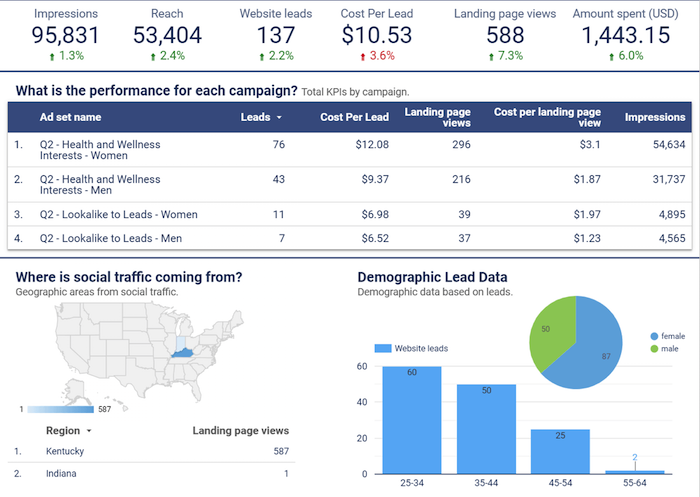
If you haven’t checked out Data Studio, you’ll want to start now because it is easy to pass in all of your business and marketing data into one place. For example, you can pass in more granular data from your Facebook ad campaigns into Data Studio while that would be a bit difficult to do with Google Analytics.

Trend #2: Companies will optimize for voice search, but not for revenue

According to ComScore, over 50% of the searches in 2020 will be from voice search. But that’s not really a new trend… everyone has been talking about that for years.

So, what’s the big deal?

Optimizing for voice search is a great way to get your brand out more, but how is that going to convert into sales?

I haven’t seen too many solutions so far when it comes to capitalizing on your voice search traffic, but so far there is Jetson.ai.

If you aren’t familiar with Jetson.ai, it makes it so people can buy from your site using voice search. It doesn’t matter if it is Alexa or Google Home, they work with most of the popular devices.

What’s cool about Jetson.ai is that it can learn from each customer and customize the interactions.

For example, if I keep ordering the same toothpaste from a specific store using voice search, Jetson.ai keeps track of that so you can easily keep ordering the same product over and over again with little to no friction.

Heck, it’s easier than logging into your computer or pulling out your phone to make a purchase.

Trend #3: Your lists won’t convert as well, so you’ll have to look for alternative communication channels

Email, it’s something we all use in the corporate world.

But here is something interesting when it comes to marketing emails… I’m in a group with a bit over 109 email marketers across different industries in different parts of the world.

And can you guess what we are all noticing?

Our open rates are staying roughly the same and that’s largely because we all know how to clean and optimizing for deliverability.

But our click rates are going down.

So far as a group we have seen our click rates drop by 9.4% in 2019.

That’s crazy considering as a group we have over 146 million email addresses.

Now does this mean email is dead?

Of course not!!!

Email is here to stay and will be here for a very long time.

But what companies will have to do in 2020 is to leverage more communication channels.

Chatbots will take off drastically. Not necessarily the Intercom’s or Drift’s of the world but more so the solutions like ManyChat and MobileMonkey.

ManyChat and MobileMonkey leverage Facebook Messenger and as they connect it with Instagram and WhatsApp it will get even more popular.

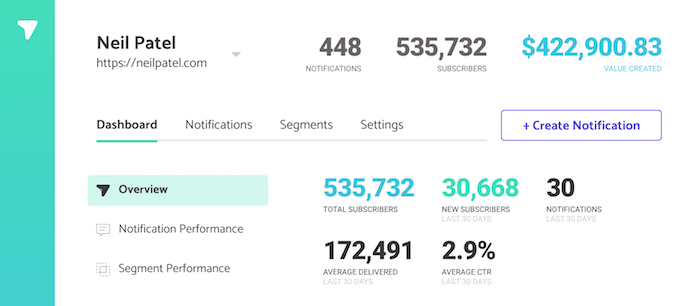
In addition to chatbots, you’ll see more people leveraging tools that allow push notifications like Subscribers.

It’s so powerful, here is the impact I’ve been able to generate from push notifications so far using Subscribers.

You can wait till next year to lever chatbots and push notifications, but I’d recommend you start sooner than later. 😉

Trend #4: Moats will almost be non-existent, other than brands

You’ve probably heard the word “moat” before. If you haven’t, just think about water around a castle.

Back in the day, they had water all around the castle and they used a drawbridge to get in and out of the castle, so it would protect them from invaders.

With your business, you may have a moat. It could be a feature, your cost structure, a technological advantage, or even a marketing advantage.

Over the years, moats in the online world have slowly been disappearing.

It’s easy for anyone to copy these days. So, what’s separating you from your competition?

Something could work right now, but it won’t last forever…

But do you know what will still be a strong moat in 2020 and even a stronger one in the future?

It’s branding.

People buy Jordan shoes because they love Michael Jordan. His brand is stronger than ever even though he hasn’t played in the NBA for roughly 16 years.

His shoes are so popular, it’s helped him boost his net worth to over a billion dollars. Plus owning a basketball team doesn’t hurt either. 😉

But what’s interesting is he’s made more money after retirement than he did as a basketball player.

And it’s not just Jordan who built a strong brand… so have the Kardashians.

Kylie launched a billion-dollar company according to Forbes and it was all because of her personal brand. Her cosmetic company isn’t doing anything revolutionary. She just has a strong brand… and good for her for monetizing her brand.

The same goes for companies like Nike, Ferrari, Tesla, American Express… and the list goes on and on.

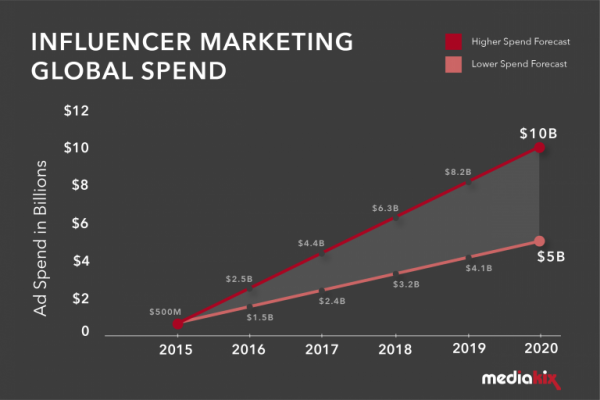
It’s why companies are spending over 10 billion dollars a year on influencer marketing.

Just look at my agency NP Digital. It’s literally one of the fastest-growing ad agencies out there. And when I look at all of my competitors’ numbers, we are growing at a much faster pace because of my brand.

Yes, we have a great team, but again, that really isn’t a moat as a lot of agencies have great teams. It’s my brand that gave us a really fast kick start and continues to hopefully push us up.

You’ll want to build a brand in 2020. Whether it is personal or corporate, it’s the best moat you can build in marketing. Plus, it will help you with Google’s EAT.

Trend #5: Marketing will become a more even playing field, you’ll have no choice but to use automation

When I first started off as an entrepreneur, I turned to SEO because I couldn’t afford the big ad budgets as my competitors.

Heck, I couldn’t even afford to run any paid ads.

Over the years, the playing field has become more level.

There are credit card companies like Brex that make it easier for startups to get approved for larger limits and you may not have to pay them back right away.

There are financing companies that will give you cash to spend on marketing, so non-venture funded companies can more easily compete.

There are even companies like Lighter Capital that will give you loans without all of the headaches based on your existing revenue.

And to top it off, software solutions are now starting to integrate AI to give better recommendations. From Clickflow and RankScience to Distilled ODN… everyone is trying to use AI to make SEO and other forms of marketing.

Heck, BrightEdge can even automate your SEO (or at least a large portion of it). According to them, their automated SEO solution increases page views per visit by 60% as well as provides 21% more keywords on page one​.

Keep in mind their clients are really big (their software starts in the thousands of dollars per month) so they would probably see better results than most companies, but still, you will start seeing many more software companies leverage AI.

Even with Ubersuggest, I’m working on creating AI that does the SEO for you so you no longer have to spend endless hours while, at the same time, saving you thousands of dollars.

In other words, the marketing playing field is getting more even. And if you want to do well, you are going to have to leverage AI and automation.

If everyone else is using it and you aren’t, you are going to get crushed because it will make changes faster and more accurately than a human. Again, it’s the only option you’ll have if you want to continually compete.

But don’t worry, there will be affordable/free solutions that exist, it’s just a matter of time. 😉

If everyone is leveraging the same AI marketing technology, how can you beat your competitors?

Well, it will come down to everything else… price, customer service, upselling, operations, sales… All of the small stuff is what’s going to help you win.

Trend #6: There will be no more silver bullets, we will all have to optimize for marginal gains

A lot of businesses were built off of one marketing channel.

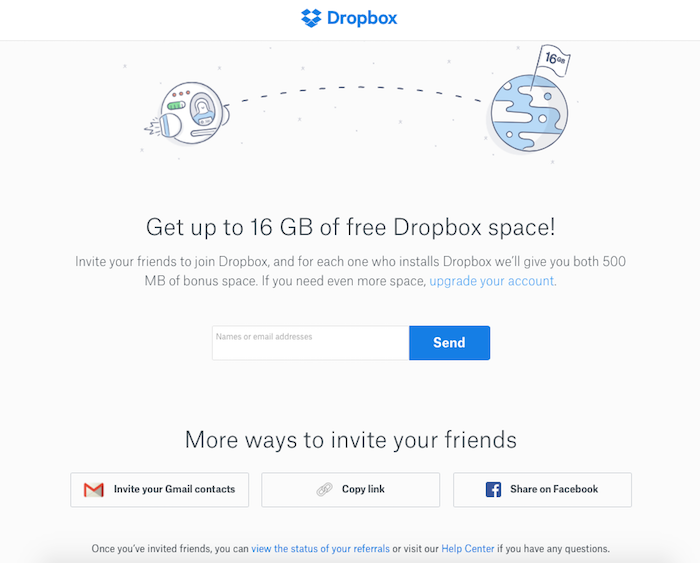
Dropbox grew through referral marketing. Invite more friends, get more free space.

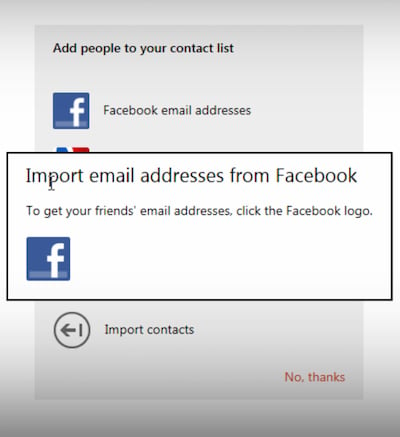
Facebook was built off your email address book. Facebook used to tap into it and invite all of your contacts to use Facebook on your behalf.

Companies like Quora and Yelp were built off of SEO. All of those rankings really help drive their businesses.

But you no longer can build a business through just one marketing channel. Good channels now get saturated extremely fast.

Even if they work and cause explosive growth, it will only last for a short while before your competitors jump on board and make it harder.

Marketing is now heading in the direction of being about “marginal gains.”

There’s a British cycling coach named Dave Brailsford. His belief was that if you improved every area related to cycling by just 1 percent, then those small gains would add up to remarkable improvement.

And he’s right, that’s how you win a race.

The same will be with your marketing. There will be a big shift from people focusing on one channel and trying to find the “Holy Grail of marketing” to working on slightly improving each area of your marketing.

From split testing your title tags to get a few ranking improvements to adding checkout bumps to your order page so you can spend a little bit more on your paid ads to using Google Data Studio so you can better optimize for your lifetime value…

It’s all about the little things. That’s what is going to add up to winning.

That’s what you’ll have to shift your mindset to in order to win in 2020 and beyond.

Trend #7: Personalization is the new marketing

The problem with marketing as it exists today is that 95% of your visitors will never convert into a customer. And that’s if you are lucky.

Chances are you are more likely looking at 97% plus of your visitors never converting.

The big reason isn’t that your marketing sucks or that all of those visitors are junk and unqualified.

It’s that your message doesn’t fit every single one of your visitors.

But through personalization, you can convert more of your visitors into customers.

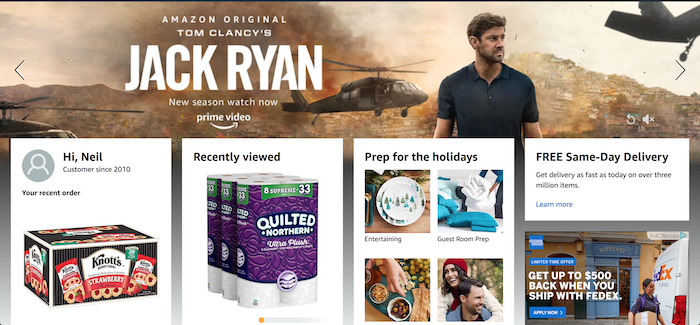
A basic example of this is Amazon. When you go to Amazon, they know your patterns and what you typically buy so they show you what they think you want to see in order to boost their conversions.

And it works! When I log into Amazon I see tons of household supplies because that is what I buy the most often. I never buy dog food (which is smart because I don’t have a dog,) so I’ll never see ads for dog food.

Businesses are also trying to personalize each and every single experience both online and offline. 

Companies like Amperity are trying to create a customer relationship engine so you can better serve each of your customers, whether it is online or offline.

Marketing is going to become a game of personalization. With ad costs and even general marketing costs rising, you have no choice but to figure out how to convert the 97% of your traffic that just never comes back.

You’ll see a big push for this in 2020.

Conclusion

I know a lot of the stuff I mentioned above isn’t talked about a lot and they aren’t popular marketing topics that everyone wants to hear… but it is the future.

These are trends that will come true, some already are, and you have to adapt for them.

Here’s the beautiful part, though. You just read this, and now have a chance to act on the information before your competition. So, make sure you go and do so.

I want to see you not only succeed but I want you to beat your competition. And I believe you can, whether you are a big company, or just starting off with very little to no money.

So, what do you think of the trends above? Do you see any marketing trends that will come true in 2020 that few people talk about?

The post Marketing Trends for 2020: Here’s What Will Happen That Nobody is Talking About appeared first on Neil Patel.


* This article was originally published here